


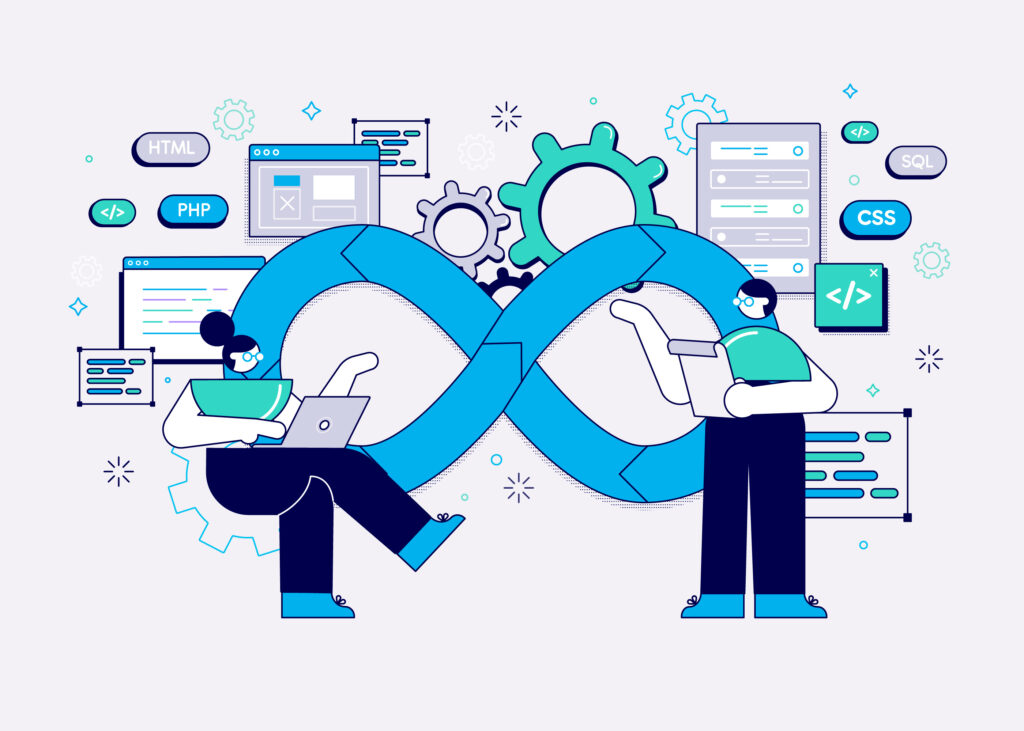
In today’s digital-first world, businesses are under constant pressure to deliver faster, more reliable, and more innovative software. This demand has given rise to DevOps, a practice that merges software development (Dev) with IT operations (Ops). What began as a cultural shift has now evolved into a business-critical practice that organizations cannot afford to ignore.
Origins of DevOps
Before DevOps, development teams and operations teams often worked in silos. Developers wrote code, and operations handled deployment and maintenance. This separation created bottlenecks, communication gaps, and slower release cycles. Around the late 2000s, as agile practices became popular, the concept of DevOps emerged to bridge this gap.
Why DevOps Matters
Faster Delivery: Businesses can release new features and updates quickly.
Collaboration: Teams work together rather than against each other.
Scalability: Applications can grow with business needs.
Customer Satisfaction: Faster delivery means customers get solutions sooner.
Core Principles
Automation: Automating builds, testing, and deployments.
Continuous Integration and Continuous Deployment (CI/CD).
Monitoring and Feedback Loops.
Collaboration and Culture.
Real-World Impact
This agility has allowed them to stay ahead in hyper-competitive markets.
Conclusion
Its evolution proves that technology and culture must grow together to meet customer expectations.